
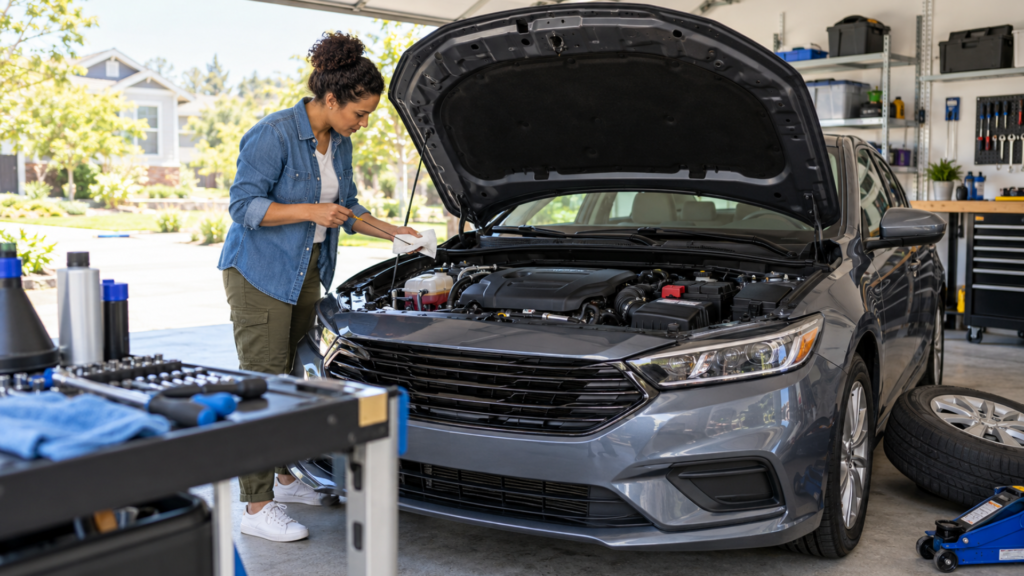
Regular car maintenance can help improve safety, prevent unexpected breakdowns, and extend the life of your vehicle. You do not need to be a mechanic to recognize the most important items that require attention.
The exact maintenance schedule varies by vehicle, so always consult your owner’s manual. The following essential car maintenance checks can help you identify common problems before they become expensive repairs.
1. Follow the Maintenance Schedule
Your owner’s manual contains a maintenance schedule designed specifically for your vehicle. It explains when to inspect or replace important components such as engine oil, filters, fluids, spark plugs, and timing belts.
Create reminders for upcoming services and keep a record of completed maintenance. These records may also be useful when you decide to sell or trade in your vehicle.
2. Check the Engine Oil
Engine oil lubricates moving components and helps protect the engine from excessive heat and wear. Check the oil level regularly, especially before a long trip.
Park on a level surface, turn off the engine, and wait a few minutes. Remove the dipstick, wipe it clean, insert it again, and then check the level. The oil should be between the minimum and maximum marks.
Use the oil type and viscosity recommended by the vehicle manufacturer. According to the U.S. Department of Energy, using the manufacturer-recommended motor oil can also help maintain fuel efficiency.
3. Inspect the Tires
Proper tire maintenance is essential for safe handling, braking, and fuel economy. Check tire pressure at least once a month and before long trips. Measure the pressure when the tires are cold and compare it with the recommended pressure shown on the driver-side door label or in the owner’s manual.
Inspect each tire for cracks, bulges, punctures, and uneven wear. You should also monitor tread depth and rotate the tires according to the manufacturer’s schedule.
The National Highway Traffic Safety Administration provides additional guidance about tire pressure, tread wear, rotations, and tire safety.
4. Pay Attention to the Brakes
Brakes should respond smoothly and consistently. Warning signs may include squeaking or grinding sounds, vibration, a soft brake pedal, or a vehicle that pulls to one side while braking.
Do not ignore these symptoms. Brake problems can affect your ability to stop safely and should be inspected by a qualified professional as soon as possible.
5. Monitor Essential Fluids
Your vehicle depends on several fluids to operate correctly. These may include coolant, brake fluid, transmission fluid, power-steering fluid, and windshield-washer fluid.
Check the levels according to the instructions in your owner’s manual. If a fluid level drops repeatedly, the vehicle may have a leak that requires professional diagnosis. Never open the radiator or coolant reservoir while the engine is hot.
6. Check the Battery
A weak battery can leave you stranded without warning. Inspect the battery terminals for corrosion and make sure the connections are secure. Common signs of a weakening battery include slow engine cranking, dim lights, and electrical problems.
Battery life depends on climate, driving habits, and vehicle use. Consider having it tested if it is several years old or if you notice starting problems.
7. Test the Lights and Windshield Wipers
Regularly test the headlights, brake lights, turn signals, hazard lights, and license-plate lights. Working lights help you see the road and make your vehicle visible to other drivers.
Replace windshield-wiper blades if they leave streaks, skip across the glass, or fail to clear rain effectively. Keeping the windshield-washer reservoir filled also helps maintain visibility.
8. Inspect Belts and Hoses
Belts and hoses can deteriorate because of age, heat, and normal use. Look for cracks, fraying, swelling, soft areas, or visible leaks.
Some components are difficult to inspect without specialized knowledge. Ask a mechanic to examine them during routine service, particularly before a long road trip.
9. Replace Dirty Air Filters
Most vehicles have an engine air filter and a cabin air filter. The engine filter prevents dirt and debris from entering the engine, while the cabin filter helps clean the air entering the passenger area.
Replacement intervals vary depending on the vehicle and driving conditions. Dusty roads, heavy traffic, and frequent driving may cause filters to become dirty sooner.
10. Respond to Warning Lights
Dashboard warning lights are designed to alert you to possible problems. Some lights indicate that routine service is due, while others may warn about the engine, brakes, battery, tire pressure, or temperature.
Consult the owner’s manual to understand each symbol. A flashing warning light or a red temperature, oil-pressure, or brake warning may require you to stop safely and seek immediate assistance.
When Should You Visit a Professional?
Contact a qualified mechanic if you notice unusual noises, fluid leaks, smoke, overheating, braking problems, persistent warning lights, or changes in the way the vehicle handles. Early diagnosis can help prevent a minor issue from becoming a major repair.
Final Thoughts
Consistent maintenance does not have to be complicated. Following the owner’s manual, checking important components regularly, and responding quickly to warning signs can help keep your vehicle safer and more reliable.
This article is for general informational purposes only and is not a substitute for professional mechanical advice. Maintenance requirements vary by vehicle. Always consult your owner’s manual and a qualified automotive professional.