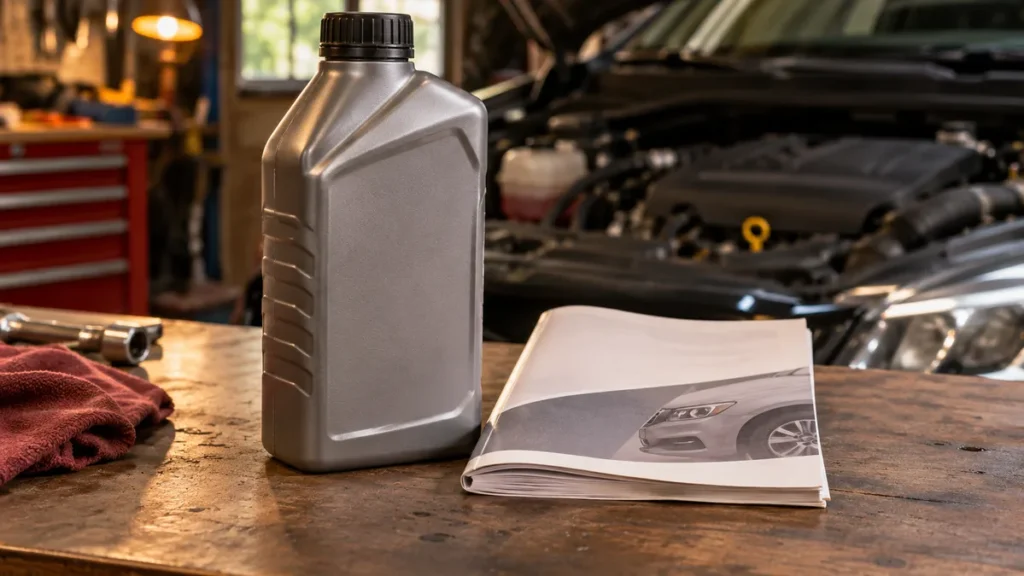
Motor oil viscosity is one part of choosing the right oil, but it is not the whole specification. Two bottles can show the same familiar number and still differ in performance approvals. The safest starting point is the owner’s manual for your exact engine, followed by a careful reading of the container or service invoice.
You do not need to become a lubrication specialist to make a sensible choice. You do need to separate three questions: what viscosity is specified, what performance standard is required, and when the oil should be changed.
What Motor Oil Viscosity Describes
Viscosity describes resistance to flow. Multigrade designations such as 0W-20 or 5W-30 communicate performance at defined low- and high-temperature test conditions. The W refers to winter; it does not mean weight. The numbers are classification grades, not a direct instruction to use the oil at a particular outdoor temperature.
For a driver, the practical lesson is to match the specified grade rather than decide that thicker oil must offer more protection. An engine is designed around particular lubrication requirements. A grade appropriate for a different car is not automatically an upgrade for yours.
Read the Manual Before the Bottle
Identify the Exact Engine
A model name can cover several engines and model years. Use the manual and information associated with your vehicle, not a search result for a similar-looking car. If the manual lists alternatives, read the conditions attached to them. Do not assume an alternative is valid in every climate or operating situation.
Record the Performance Requirements
Alongside viscosity, note any API category, ILSAC specification, or manufacturer approval. API’s oil quality marks help identify licensed oils and their performance categories. Manufacturer-specific requirements may also apply. A broad marketing phrase on the front label should not replace the actual specification.
Keep the Requirements Together
Create a note with the model year, engine, viscosity, required approval, and manual page. If a shop supplies bulk oil, ask for the product name and specifications on the invoice. This makes the next service easier to check and helps avoid relying on memory.
What the Label Does Not Tell You Alone
“Full synthetic,” “high mileage,” and other product descriptions do not by themselves establish compatibility. They describe product characteristics or positioning, while your engine’s required specifications determine suitability. Compare the complete product information before choosing.
Do not confuse an oil’s advertised capability with your vehicle’s service interval. The interval comes from the maintenance schedule or oil-life system and its instructions. Driving conditions can change the schedule, and some vehicles specify time limits as well as mileage.
Ask Better Questions at an Oil Change
- Which viscosity and manufacturer specification will be used?
- Is the proposed oil suitable for this exact engine?
- Which filter is being installed?
- What maintenance schedule supports the next service date?
- Will the invoice record the oil, mileage, and date?
These questions are more useful than asking for “the best oil.” They turn a vague preference into a checkable service instruction. If a shop proposes a different grade, ask for the vehicle manufacturer’s supporting guidance before authorizing it.
Checking Oil Is a Separate Task
Choosing the correct oil does not tell you whether the engine has the correct amount. Follow the manual’s checking procedure, whether it uses a dipstick or an electronic display. Overfilling and underfilling are both problems; do not guess at quantities or add oil simply because a warning appeared.
An oil-pressure warning needs the response specified in the manual and prompt professional attention. It should not be confused with a routine oil-change reminder. Our guide to urgent vehicle warning signs explains why symptoms deserve attention rather than a dashboard reset.
Add the oil specification and service receipts to your maintenance checklist. The useful outcome is a repeatable process: identify, verify, document, and follow the correct schedule.
Sources and Further Reading
This article explains general terminology. Follow the specifications and maintenance instructions for your exact vehicle; consult a qualified technician when requirements or warning messages are unclear.