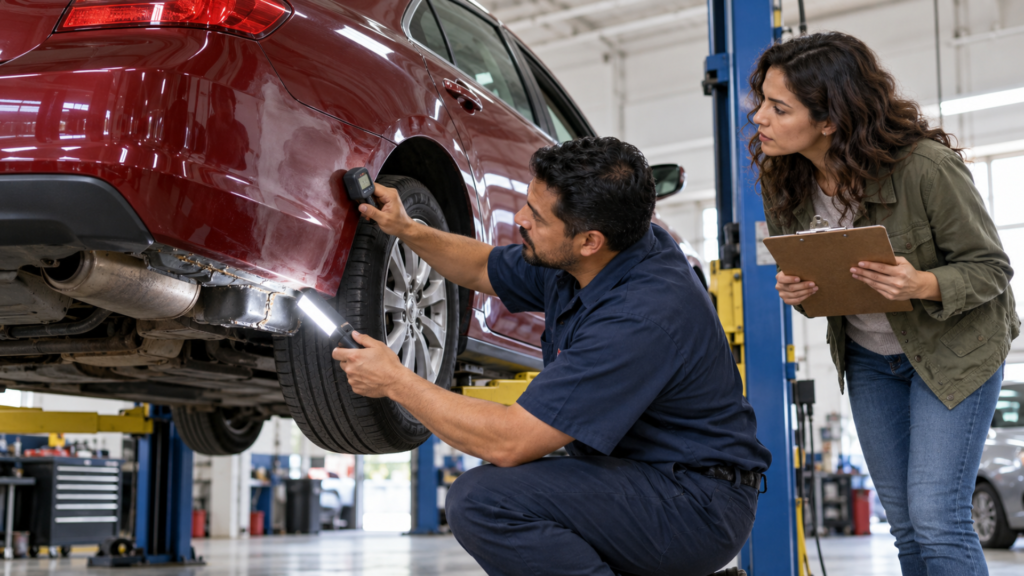
What is a salvage title? It is a title brand used to identify a vehicle that has experienced serious damage or another event significant enough to affect its legal title status. However, the exact definition, damage threshold, and inspection requirements vary by state.
A salvage vehicle may have a much lower price than a comparable used car with a clean title. That discount can be attractive, but it may also reflect safety concerns, uncertain repair quality, limited insurance coverage, financing difficulties, and reduced resale value.
Before considering one, investigate why the title was branded, how the vehicle was repaired, and whether it can be legally registered and insured where you live.
What Is a Salvage Title, Exactly?
A state motor vehicle agency may issue a salvage brand after an insurance company declares a vehicle a total loss or after the vehicle experiences qualifying damage. The event may involve a collision, flooding, fire, theft recovery, hail, or another condition recognized under state rules.
“Total loss” does not always mean that a vehicle is physically impossible to repair. It commonly means that repairing it is not economically reasonable under the insurer’s calculations and applicable state requirements.
Because states use different terminology and standards, never assume that a salvage designation has precisely the same meaning everywhere. Review the title and registration rules published by the DMV or motor vehicle agency in your state.
Salvage Title vs. Rebuilt Title
A vehicle carrying a salvage title may not be eligible for normal road use until it has been repaired and completed the process required by its state. After repairs and any required examinations, the vehicle might receive a rebuilt, reconstructed, revived, or similarly branded title.
A rebuilt title generally shows that the vehicle was previously classified as salvage and later completed a state process allowing it to return to the road. It does not necessarily mean that the vehicle has been restored to its original factory condition.
State examinations may focus on vehicle identity, stolen parts, required equipment, or roadworthiness. Their scope varies, so they should not be treated as replacements for a detailed inspection by an independent mechanic and collision-repair specialist.
What a Title Brand Can—and Cannot—Tell You
A title brand provides an important warning about the vehicle’s history, but it does not explain every repair. It may not reveal which structural areas were damaged, whether water reached electronic modules, which replacement parts were used, or whether modern safety systems were properly calibrated.
A clean title is not an absolute guarantee that a vehicle has never been damaged. Reporting gaps, delayed records, inconsistent state definitions, and title fraud can affect the available information.
The federal National Motor Vehicle Title Information System provides access to approved vehicle-history report providers. NMVTIS reports may contain title information, brand history, odometer readings, and salvage or total-loss records reported by participating sources.
Major Risks to Investigate Before Buying
Structural and Collision Repairs
Poorly repaired structural damage can affect alignment, tire wear, handling, crash protection, and the fit of body panels. Ask an experienced collision-repair specialist to examine frame measurements, welds, corrosion protection, suspension mounting points, and evidence of sectioned panels.
Flood and Electrical Damage
Flood exposure can create corrosion and intermittent electrical problems that appear months after the repair. Inspect wiring connectors, control modules, carpets, seat tracks, the spare-tire compartment, and concealed areas for moisture, sediment, staining, or corrosion.
Air Bags and Driver-Assistance Systems
Confirm that deployed air bags, seat-belt pretensioners, sensors, cameras, and radar components were properly replaced or repaired. Advanced driver-assistance features may require special calibration after collision work, windshield replacement, suspension repair, or wheel alignment.
Insurance, Financing, and Resale
Some lenders will not finance vehicles with branded titles. Insurers may limit available coverage or calculate the vehicle’s value differently. Before paying a deposit, give the VIN and exact title brand to your lender and insurance company and request their answers in writing.
A branded vehicle can also be harder to sell or trade. Its future value may remain substantially below that of a similar clean-title vehicle, even when the repairs appear satisfactory.
How to Research a Salvage or Rebuilt Vehicle
Our used-car history guide explains how to cross-check title information, mileage records, and the seller’s documents.
- Match the VIN. Compare the VIN on the dashboard, door label, title, history report, and sales documents.
- Order a vehicle-history report. Look for title brands, total-loss records, odometer inconsistencies, auction events, and changes between states.
- Contact the state DMV. Verify the current title status and the requirements for registration, inspections, and ownership transfer.
- Request repair documentation. Ask for invoices, parts receipts, alignment reports, calibration records, and photographs showing the vehicle before and during repairs.
- Arrange an independent inspection. Use a mechanic and, when serious body damage is involved, a qualified collision-repair specialist. Follow our used-car inspection guide for additional checks.
- Check for recalls. Search the VIN using the official NHTSA recall tool.
- Confirm insurance and financing. Do this before negotiating or signing a purchase agreement.
Questions to Ask the Seller
- Why was the vehicle declared salvage or a total loss?
- Which areas and safety systems were damaged?
- Who performed the repairs?
- Are original photographs, estimates, and invoices available?
- Were the air bags and seat belts replaced when necessary?
- Were cameras and driver-assistance sensors calibrated?
- What inspections did the vehicle complete?
- May I take it to an independent specialist?
Be cautious when a seller refuses an independent inspection, cannot explain the title history, provides incomplete documentation, pressures you to act immediately, or claims that a rebuilt designation guarantees the quality of every repair.
Can Buying One Ever Make Sense?
A carefully repaired branded-title vehicle may suit a buyer who understands its history, obtains expert inspections, confirms its legal status, and accepts its financial limitations. The price should reflect the added uncertainty and reduced future value.
Do not compare it only with the advertised price of a clean-title vehicle. Consider inspection expenses, immediate repairs, insurance costs, financing terms, registration requirements, reliability, and eventual resale value.
State Example: California Revived Salvage Registration
Checked October 18, 2026: California DMV describes a revived salvage vehicle as one previously reported as a total loss and subsequently rebuilt to operational condition. Its registration checklist includes an application, ownership evidence, vehicle verification or CHP inspection documentation, an electronic Vehicle Safety Systems Inspection certificate, and applicable fees. Additional documents or a smog certificate may be needed.
Use the California DMV revived salvage requirements to check the full current process. This is one state’s example, not a nationwide rule or proof that a particular car is safe. Ask your own state agency whether the exact title brand can be registered, and arrange independent mechanical and collision-repair inspections.
Final Thoughts
Understanding what a salvage title means is only the first step. The individual vehicle, the reason for the title brand, the quality of its repairs, and the rules in your state matter more than the discount alone.
Use official title records, obtain documentation, check recalls, and hire independent professionals before making a decision. If the vehicle’s history cannot be verified clearly, walking away may be the most economical choice.
This article provides general educational information and is not legal, insurance, financial, or mechanical advice. Title terminology and registration requirements vary by state. Consult your state motor vehicle agency, insurer, lender, and qualified automotive professionals before purchasing a branded-title vehicle.