
Buying a pre-owned vehicle can be a practical way to reduce costs, but appearance alone does not reveal its true condition. Learning how to inspect a used car can help you identify warning signs, understand the vehicle’s history and make a more informed decision.
A proper evaluation should include more than a quick test drive. The exterior, interior, mechanical components, documents, safety recalls and final purchase conditions all deserve attention. The following steps can help you organize that process.
How to Inspect a Used Car: Start With the VIN
Before inspecting the vehicle, ask the seller for its 17-character vehicle identification number, commonly called the VIN. It normally appears on the dashboard near the windshield, on the driver-side door frame and on registration or title documents.
Make sure the number displayed on the vehicle matches the number shown on its paperwork. Differences may indicate an administrative error or a more serious problem that should be investigated before proceeding.
The VIN can also be used to obtain a vehicle history report. Depending on the provider and available records, a report may contain information about previous owners, reported accidents, insurance losses, title status and whether the vehicle has previously been classified as salvage.
Check for Open Safety Recalls
Visit the official National Highway Traffic Safety Administration recall page and enter the VIN. This tool can show whether the vehicle has certain unrepaired safety recalls.
A recall does not automatically mean that a vehicle should be rejected. However, you should understand the issue and confirm how it will be corrected. According to NHTSA, recall repairs are generally performed free of charge by the manufacturer’s authorized dealership.
Inspect the Exterior Carefully
When learning how to inspect a used car, begin by viewing it during daylight and, when possible, on a dry and level surface. Walk around it slowly and compare the paint color and finish across the doors, fenders, hood and trunk.
Look for irregular panel gaps, paint overspray, dents, rust, cracked lights or areas where the color does not match. These signs do not always indicate major damage, but they may suggest that repairs were previously performed.
Check the tires for adequate tread and even wear. Uneven wear can sometimes be associated with incorrect tire pressure, worn suspension components or alignment problems. Confirm that all four tires have suitable specifications and inspect the spare tire if one is included.
Review the Interior and Electrical Equipment
Inside the vehicle, inspect the seats, carpets, roof lining and cargo area. Strong odors, stains, corrosion beneath the seats or persistent moisture may indicate a water leak or previous flood exposure.
Turn on the ignition and observe the dashboard. Warning lights should illuminate during the initial system check and then switch off as appropriate. A warning light that remains on may require further diagnosis.
Test the air conditioning, windows, locks, exterior lights, windshield wipers, infotainment system, cameras and other available features. Small electrical problems can become inconvenient or expensive after the purchase.
Look Beneath the Hood
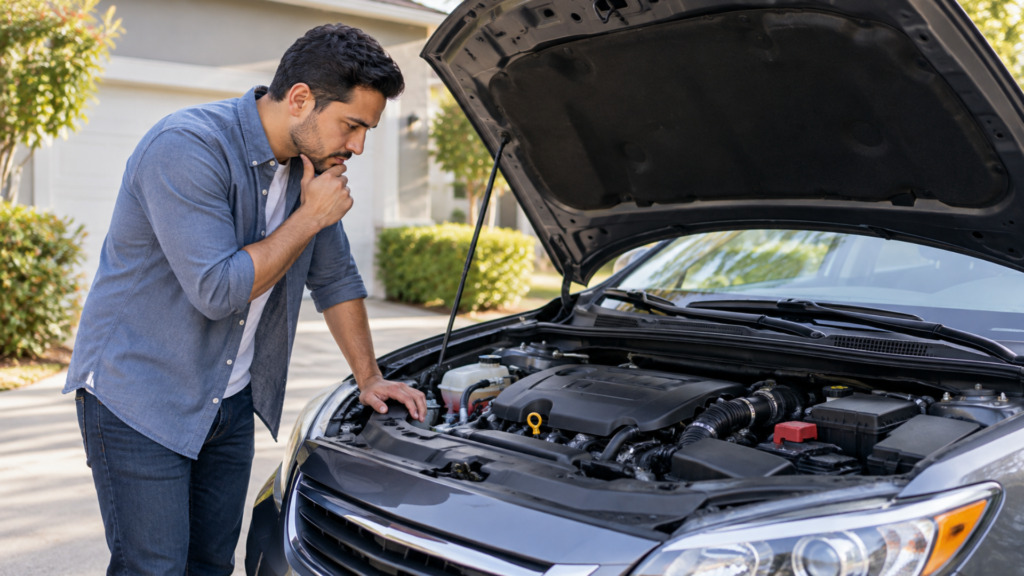
You do not need to be a mechanic to notice basic warning signs. With the engine off and cool, look for visible leaks, damaged hoses, loose connections, corrosion or a strong burning smell.
Ask when the oil, filters, battery, brakes and other maintenance items were last serviced. Maintenance receipts can help support the seller’s statements, although they do not replace a professional inspection.
A very clean engine compartment is not necessarily a problem, but it can make recent leaks more difficult to identify. Consider the condition of the engine together with the service records and an independent evaluation.
Take a Careful Test Drive
An important part of understanding how to inspect a used car is evaluating how it behaves on the road. Pay attention to how the engine starts, accelerates and idles. Listen for unusual knocking, grinding, clicking or squealing sounds.
Test the brakes in a safe location. The vehicle should stop predictably without strong vibrations, pulling to one side or unusual noises. Observe the steering, transmission and suspension on different road surfaces when conditions allow.
A short drive around a parking lot may not reveal every problem. If possible, include ordinary city speeds and a faster road while following local traffic laws.
Arrange an Independent Mechanical Inspection
Even when the vehicle appears to be in good condition, consider having it inspected by a qualified independent mechanic before buying it. The Federal Trade Commission recommends obtaining an independent inspection because a vehicle history report is not a substitute for examining its current mechanical condition.
If the seller refuses to allow a reasonable inspection, consider that response carefully. A professional may identify problems involving the brakes, suspension, engine, transmission, frame or electronic systems that are difficult to detect during a basic review.
Read the Documents Before Buying
When purchasing from a dealership, examine the Buyers Guide displayed on the vehicle. The Federal Trade Commission explains that this document indicates whether the vehicle is being sold with a warranty or “as is.”
Request the complete out-the-door price in writing and review taxes, registration costs, optional products and additional fees. Do not rely solely on verbal promises. Any warranty, repair commitment or special condition should appear in the written documents.
Avoid Rushing the Final Decision
Knowing how to inspect a used car does not guarantee that it will never require repairs. It does, however, provide a clearer understanding of its condition and helps you compare different vehicles using consistent criteria.
Review the VIN, history, recall status, physical condition, mechanical inspection and written terms before making the final decision. If important information is missing or the seller creates unnecessary pressure, taking more time may be the safest option.
Following a consistent process can reduce uncertainty and help you recognize when additional professional advice is necessary.
Informational notice: This article is provided for general educational purposes only. This website does not sell vehicles, represent dealerships, arrange financing or provide mechanical, legal or financial advice. Vehicle condition, prices, warranties and regulations may vary. Always verify current information with the appropriate official source and consult a qualified professional when necessary.