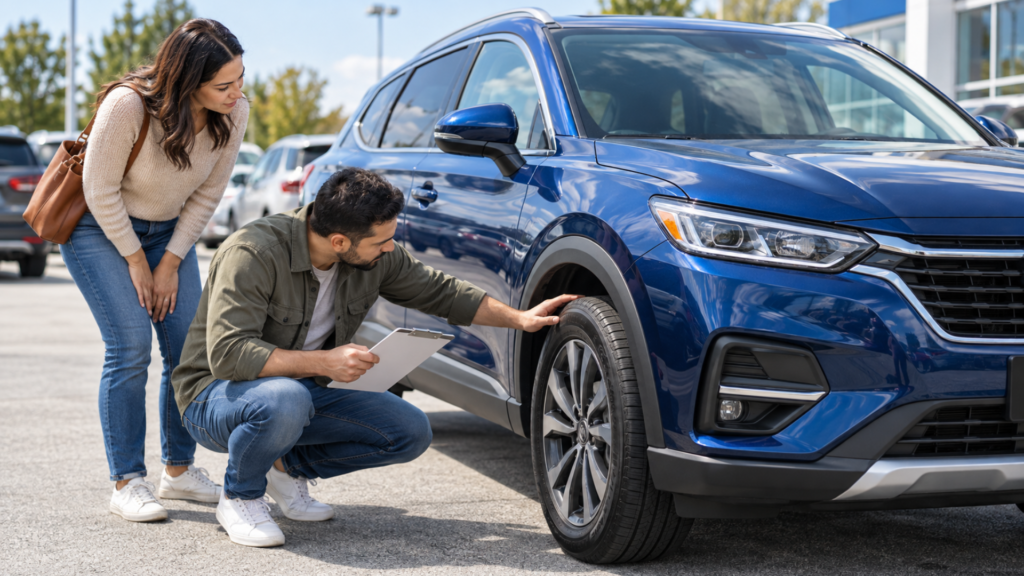
The most expensive mistakes when buying a used car often happen when a buyer commits before the evidence is complete. This guide focuses on nine decision points: what to obtain, what to question, and when to pause. Use the linked inspection, history and test-drive guides for the detailed procedures.
1. Shopping Without a Complete Budget
Set a purchase limit and a separate allowance for running costs and immediate repairs. Obtain an insurance quote for the actual vehicle. If the purchase would use all your available cash, a low asking price may still leave too little room for the inspection’s findings.
Use the ownership cost calculator with realistic assumptions; a blank expense field is not evidence that the expense is zero.
2. Choosing a Car Based Only on Appearance
Decide which requirements are non-negotiable before viewing the car: passenger access, cargo fit, parking space, powertrain or another actual need. A polished vehicle that fails a requirement should not stay on the shortlist simply because it looks well cared for. Appearance also does not establish mechanical condition.
3. Treating a History Report as a Verdict
Match the VIN and investigate inconsistent title or mileage records using our vehicle-history research guide. Use NMVTIS to identify approved providers. A report summarizes available records; missing damage information does not prove that no damage occurred.
Pause when: the seller cannot resolve a material mismatch with documents. An explanation is something to verify, not a reason to ignore the discrepancy.
4. Relying on the Seller’s Inspection
Arrange an independent inspection with a qualified mechanic before committing. The FTC’s dealer-purchase guidance distinguishes that inspection from a history report and a dealer’s certification. Our inspection checklist helps organize observations to give the mechanic.
Pause when: you cannot obtain an independent assessment or written findings for an important concern. Do not invent a repair allowance from a symptom alone.
5. Using the Test Drive Only to Look for Faults
A car can drive without an obvious fault and still be uncomfortable or unsuitable. Use the test-drive checklist to assess your everyday route, controls, seating and cargo access. Record observations while parked or have a passenger take notes.
Pause when: a safety concern appears or a critical everyday task does not work for you. A successful drive does not replace the mechanic’s inspection.
6. Assuming Recall Work Is Already Complete
Run the vehicle’s VIN through NHTSA’s recall lookup and follow any urgent manufacturer instructions. If a campaign appears, ask an authorized dealer about remedy availability and documentation. The lookup has limitations; no result is a complete safety certificate.
Our recall action guide explains the follow-up. Do not test-drive a vehicle contrary to a do-not-drive instruction.
7. Confusing a Verbal Promise With Written Coverage
For a dealer sale, read the Buyers Guide, warranty and any separate service contract. Identify what is covered and which conditions apply. Request written terms for promised repairs and keep the final documents. Private-party transactions and state protections differ; do not assume dealer rules apply to every sale.
8. Negotiating Only the Monthly Payment
Compare the written out-the-door price and financing terms separately. A payment can fall because the term becomes longer, even while the total paid rises. Review the amount financed, APR, term, total payments and selected add-ons.
The dealer-fee guide helps reconcile the quote; the APR guide explains financing comparisons. Do not treat a monthly-payment target as a complete budget.
9. Signing With Important Questions Still Open
Before signing, reconcile the VIN, mileage, price, fees, financing, coverage and agreed repairs across the documents. If a term differs from what you understood, resolve it first. Pressure to finish is not evidence that the paperwork is correct.
Keep copies of the final agreement. Obtain advice from the appropriate state agency or a qualified professional when ownership, title or legal terms remain unclear.
A Decision Check Before You Commit
Use this guide to decide whether to proceed, pause for evidence, or walk away. Use our used-car inspection guide for the physical checks themselves.
| Decision | Evidence to obtain first |
|---|---|
| Can I afford this vehicle? | A written out-the-door quote, insurance quote, and a reserve for repairs—not only a monthly payment. |
| Does the history make sense? | Matching VINs, title records, service evidence, and explanations for inconsistencies. |
| Am I ready to sign? | An independent inspection, the final contract, and written terms for every promised repair or warranty. |
Review dealer fees and out-the-door pricing, then use the car ownership cost calculator to estimate a budget. A low payment does not establish that the vehicle is affordable or in good condition.
This article provides general educational information and does not constitute legal, financial, mechanical, or purchasing advice. Vehicle condition and consumer-protection laws vary. Verify the information independently and consult qualified professionals before completing a transaction.