
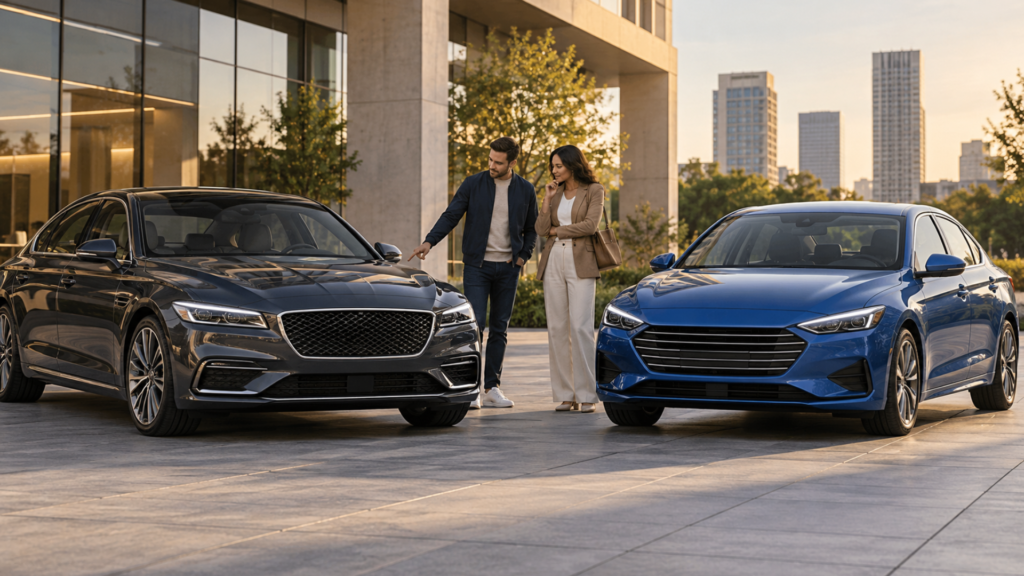
Luxury vehicles often promise refined interiors, advanced technology, stronger performance, and a more exclusive ownership experience. Mainstream vehicles usually emphasize practicality, accessibility, and everyday transportation.
However, the difference is not always as simple as expensive versus affordable. Many mainstream vehicles now include features that were once limited to luxury models. Understanding what changes between the two categories can help you decide which features genuinely matter to you.
What Defines a Luxury Car Brand?
A luxury brand generally places additional emphasis on design, materials, comfort, performance, technology, and customer experience. Its vehicles may offer quieter cabins, more powerful engines, detailed interior finishes, and additional personalization.
The luxury label does not automatically make every model superior in every category. An entry-level luxury vehicle and a well-equipped mainstream vehicle may have similar dimensions, technology, or performance.
Interior Materials and Comfort
Luxury vehicles may use softer interior surfaces, upgraded upholstery, additional sound insulation, adjustable ambient lighting, and more extensive seat controls. Attention may also be given to how switches feel and how consistently materials are finished.
Mainstream brands increasingly offer heated seats, large displays, premium-style upholstery, quiet cabins, and other desirable features. The difference may become more noticeable in small details than in basic functionality.
Inspect the exact trim instead of relying on advertising photographs. Some premium materials or comfort features may be optional rather than standard.
Performance and Driving Experience
Luxury models may offer stronger engines, sophisticated suspension systems, additional drive modes, or greater attention to steering response and ride quality. Some are designed for comfort, while others prioritize performance.
A mainstream vehicle may still provide responsive acceleration and a comfortable ride for everyday driving. Greater horsepower does not necessarily improve a vehicle’s suitability for commuting, family transportation, or congested city streets.
A meaningful test drive is essential. Evaluate visibility, seat comfort, braking, road noise, ride quality, and ease of using the controls—not merely acceleration.
Technology and Convenience Features
Premium brands often introduce advanced displays, audio equipment, driver-assistance systems, and convenience features early. Over time, many of these technologies become available in mainstream models.
More technology can also mean more complexity. Determine whether frequently used functions are intuitive and whether climate, audio, and safety controls can be operated without unnecessary distraction.
Compare the exact equipment list. Similar-looking vehicles may differ significantly because of trims and optional packages.
Safety Should Be Compared by Vehicle
A luxury badge alone does not establish how well a vehicle will perform in every crash or driving situation. Compare safety ratings and equipment for the specific model and model year.
The NHTSA 5-Star Safety Ratings allow shoppers to research crash-test results and available safety information. Comparisons should involve vehicles of similar size and weight whenever possible.
Also verify which driver-assistance features are standard, optional, or unavailable on the trim you are considering.
Maintenance and Repair Costs
A luxury vehicle may require specialized parts, larger tires, premium fluids, or technicians familiar with a particular system. Labor rates and replacement components can also be more expensive.
Mainstream vehicles may have more widely available parts and service options, although this varies by model and location. Before buying, investigate routine service requirements, tire sizes, insurance estimates, and likely repair expenses.
A used luxury vehicle may have a lower purchase price than when it was new, but its maintenance needs do not necessarily become inexpensive.
Warranty and Service Experience
Luxury brands may offer dealership amenities, pickup services, loaner vehicles, or longer coverage for certain items. Availability and conditions vary, so read the written warranty rather than assuming that every service is included.
The Federal Trade Commission explains that a manufacturer’s warranty and an optional auto service contract are not the same. Before purchasing additional coverage, compare it with the protection already included.
Insurance and Depreciation
Insurance premiums depend on numerous factors, including the vehicle, location, driver history, repair costs, and selected coverage. Obtain estimates for the exact models before deciding.
Depreciation also varies considerably. Some vehicles retain value better than others, but buyers should not assume that every model from a luxury or mainstream brand follows the same pattern.
When a Luxury Brand May Make Sense
A luxury vehicle may be worth considering when you place significant value on cabin refinement, specialized performance, premium materials, additional customization, or a particular ownership experience—and can comfortably manage the total cost.
The decision should fit your finances without reducing the money available for insurance, maintenance, emergency repairs, and other priorities.
When a Mainstream Brand May Be the Better Fit
A mainstream vehicle may make more sense when you prioritize practical transportation, familiar controls, widely available service, and lower potential ownership expenses.
A high trim level can sometimes provide many comfort and technology features without moving into a luxury brand. Compare both alternatives directly because pricing may overlap.
Questions to Ask Before Choosing
- Which features will I use regularly?
- Are those features standard or optional?
- How much will insurance and routine service cost?
- Are qualified service facilities available nearby?
- Does the vehicle require premium fuel?
- Can I comfortably afford unexpected repairs?
- Does the driving experience justify the additional cost?
Final Thoughts
Luxury vehicles generally offer greater refinement, personalization, or performance, while mainstream vehicles tend to focus on practical value. Neither category is automatically the correct choice for every driver.
Compare specific models and trims, calculate the complete ownership cost, and test-drive both options. The right vehicle is the one that satisfies your real needs without requiring you to pay for features you will rarely use.
This article provides general educational information and does not recommend any manufacturer or vehicle. Features, warranties, costs, and availability vary by model, trim, location, and model year. Verify current information before making a purchase.