
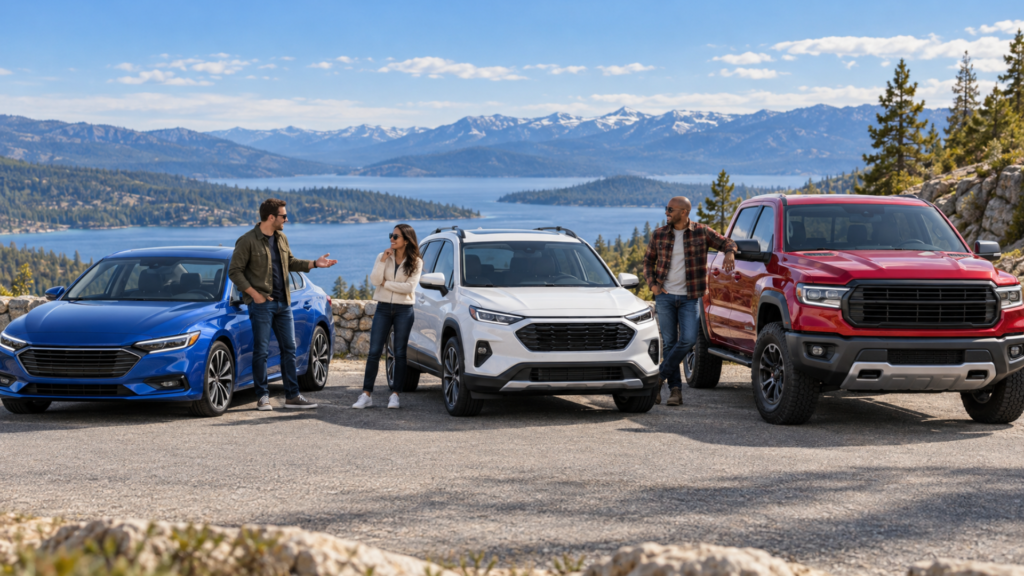
Toyota, Honda, and Ford are three familiar automotive brands in the United States, but they do not serve every driver in exactly the same way. Each offers different vehicle types, powertrains, features, and driving experiences.
This Toyota vs. Honda vs. Ford comparison does not declare one universal winner. Instead, it explains what to consider when deciding which brand may fit your daily driving, family needs, work requirements, and lifestyle.
Toyota: A Broad and Varied Lineup
Toyota offers cars, SUVs, pickup trucks, minivans, hybrids, plug-in hybrids, battery-electric vehicles, and other electrified options. This variety can make the brand worth considering for drivers who want several vehicle types and powertrains to compare.
A commuter may begin with a sedan or hybrid, while a family might explore an SUV or minivan. Drivers who need a vehicle for outdoor activities or certain work tasks can also compare Toyota pickup trucks.
Toyota may suit drivers who want:
- A broad selection of vehicle styles.
- Multiple hybrid and electrified options.
- Choices for commuting, family transportation, and utility.
- A practical vehicle they intend to keep for several years.
Explore the current selection on the official Toyota USA website. Available models and features can change by model year.
Honda: Cars and SUVs for Everyday Driving
Honda’s U.S. lineup includes passenger cars, SUVs, crossovers, hybrid models, and other electrified vehicles. Its selection can appeal to drivers looking for a vehicle that feels manageable during daily commuting while still providing useful passenger and cargo space.
Compact cars may be suitable for urban driving and smaller parking spaces. Honda’s crossovers and SUVs can offer more flexibility for passengers, groceries, luggage, and family activities.
Honda may suit drivers who want:
- A car or crossover for regular commuting.
- A balance between interior space and manageable dimensions.
- Hybrid choices within parts of the lineup.
- A straightforward vehicle for daily transportation.
Current cars, SUVs, and available powertrains can be reviewed on the official Honda automobiles website.
Ford: Strong Choices in Trucks and Utility Vehicles
Ford has a strong presence in pickup trucks, SUVs, performance vehicles, commercial vans, and electrified models. It may attract drivers who need greater utility, towing capability, cargo space, or a vehicle suited to work and outdoor use.
However, choosing a truck or large SUV should involve more than appearance. Drivers should consider parking space, passenger needs, fuel or charging access, payload, towing requirements, and operating costs.
Ford may suit drivers who want:
- A pickup truck for work, recreation, or towing.
- A larger SUV with passenger and cargo capacity.
- Traditional, hybrid, plug-in hybrid, or electric choices.
- A vehicle designed around utility or specialized use.
Visit the official Ford website to review its current categories and model availability.
Quick Toyota vs. Honda vs. Ford Comparison
| Brand | Common Strength | Worth Exploring For |
|---|---|---|
| Toyota | Broad variety of vehicle types and powertrains | Commuting, family use, hybrids, SUVs, and trucks |
| Honda | Cars and crossovers suited to everyday use | Daily driving, city use, families, and hybrid options |
| Ford | Trucks, SUVs, utility vehicles, and electrified choices | Work, towing, cargo, recreation, and larger vehicles |
This overview describes general differences rather than guaranteeing that every model from a brand will have the same qualities.
Compare the Vehicle, Not Just the Brand
A brand name can help you create a shortlist, but the individual vehicle matters more. Two models from the same manufacturer may differ significantly in size, safety technology, fuel economy, performance, comfort, and ownership expenses.
Before making a decision, compare vehicles from the same category and model year. A compact sedan should not be evaluated against a full-size pickup truck because they are designed for different purposes.
Questions to Ask Before Choosing
- How many passengers do you normally carry?
- Will the vehicle be used mainly in the city or on highways?
- How much cargo space do you actually need?
- Do you need towing or off-road capability?
- Can you conveniently charge an electric or plug-in hybrid vehicle?
- What are the expected insurance, fuel, maintenance, and repair costs?
- Are local service centers and replacement parts readily available?
New and Used Vehicles Require Different Research
When shopping for a new vehicle, compare the warranty, safety equipment, specifications, and included features of the exact trim level. Optional equipment can significantly change a vehicle’s final configuration.
For a used vehicle, its history and condition may be more important than the reputation of the badge. Review maintenance records, check the vehicle history, look for open recalls, and arrange an independent pre-purchase inspection.
Take a Meaningful Test Drive
A test drive should reflect your real routine. Check visibility, seat comfort, controls, braking, acceleration, cabin noise, parking ease, and rear-seat access. If possible, drive on streets similar to those you use regularly.
Families should verify that child seats, passengers, and everyday cargo fit comfortably. Drivers considering trucks should confirm that the vehicle’s documented payload and towing ratings match their actual requirements.
Which Brand Fits Your Driving Needs?
Toyota may be a good starting point for shoppers seeking variety and numerous electrified choices. Honda may appeal to people prioritizing cars and crossovers for everyday transportation. Ford may deserve closer attention from drivers interested in trucks, larger SUVs, work vehicles, or utility-focused capability.
The best choice ultimately depends on the exact model, its condition, your budget, and how you plan to use it. Compare equivalent vehicles, examine official specifications, and avoid choosing solely because of brand familiarity.
This article provides general automotive information and does not recommend or endorse a particular manufacturer or vehicle. Models, features, specifications, and availability can change. Verify current information with the manufacturer and consult qualified automotive professionals before making a purchase.