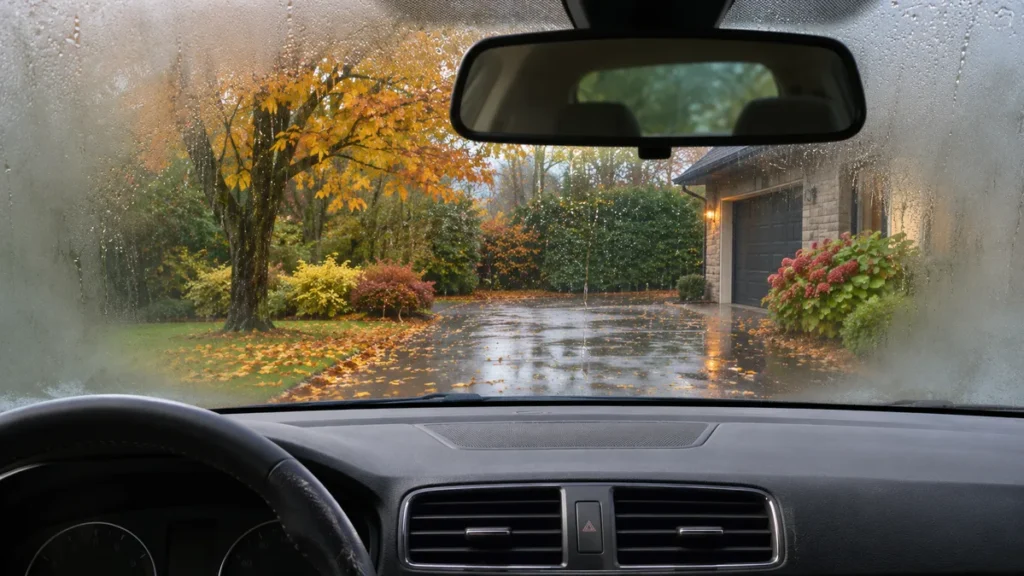
Knowing how to defog car windows begins with identifying where the moisture is. Fog on the inside and condensation on the outside are different situations. Before changing settings, park safely and determine which side of the glass is affected. Do not drive with only a small clear patch in front of you.
This guide explains a practical approach for ordinary condensation. Control names and automatic functions vary, so your vehicle’s owner’s manual remains the reference for the exact procedure.
How to Defog Car Windows From the Inside
Interior fog appears when moisture in the cabin condenses on cooler glass. Occupants, damp clothing, wet floor mats, and snow carried inside can contribute. The task is to clear the glass and reduce the moisture source, not simply wipe a viewing hole.
Select the windshield defrost or maximum-defrost setting described in the manual. Many systems direct airflow to the windshield, use outside air, and engage air conditioning to help remove moisture. Some settings are controlled automatically; a button appearing unavailable may be normal behavior in that mode.
Let the system clear the windshield and side windows sufficiently before moving. Adjust the temperature and fan as instructed for your car. Avoid assuming that one universal sequence works for every manual, automatic, hybrid, or electric climate system.
Check Whether the Fog Is Outside
If condensation is on the outside, using the wipers can help identify and remove it when the glass is not iced over. A very cool windshield in warm humid air can develop exterior moisture. Adjusting cabin cooling may help prevent repeated condensation, but visibility comes first.
Do not use wipers as ice scrapers. Clear frost and snow with suitable tools before driving, and free frozen blades according to the manual. Never pour boiling water on a windshield to hurry the process.
Know Your Front and Rear Controls
The front windshield usually receives directed airflow, while many rear windows have an electric heating grid. Some vehicles also have heated mirrors or a heated windshield. Learn the symbols while parked and check the manual for time limits or automatic shutoff.
When cleaning the rear glass, use a method appropriate for the heating elements and any window film. Scraping aggressively across the inside can damage components. If a grid only clears part of the window, have it inspected rather than improvising an electrical repair.
Reduce Recurring Cabin Moisture
- Remove wet clothing and damp items when you reach your destination.
- Dry removable mats as appropriate and reinstall them securely.
- Keep interior glass clean with a product suitable for the surface.
- Keep dashboard defroster outlets unobstructed.
- Have persistent water entry or unusual dampness investigated.
Record when the problem occurs. Does it follow rain, appear after several passengers enter, or persist even on dry days? Does airflow seem weaker than before? These observations help a technician distinguish a normal moisture load from a fault.
When to Arrange Service
If the system cannot maintain visibility, stop using the car until the issue is resolved. Persistent fog, unexpected odors, wet carpeting, or ineffective heating deserve diagnosis. A dirty filter may affect airflow in some vehicles, but replacing it should not be presented as a guaranteed cure for every fogging problem.
Check wipers, washers, and defrost operation as part of your regular maintenance routine. If other symptoms occur, consult our warning-sign guide and the instructions for your vehicle.
A Simple Parked-Car Practice Session
Before the next cold morning, locate the front defrost control, rear defroster, fan adjustment, and recirculation control. Read what maximum defrost changes automatically. Then return the system to your preferred setting. Learning this while parked removes the need to study unfamiliar controls in traffic.
The goal is not the fastest possible departure. It is a clear windshield, usable mirrors, and visibility that remains adequate throughout the drive.
Source and Further Reading
Ford F-150 2025 owner’s manual: maximum defrost (PDF, about 14 MB; printed pages 174 and 179). This illustrates one system; check the manual for your own vehicle.
This article provides general visibility and maintenance information. Follow your vehicle’s instructions and seek qualified service if the windows cannot be kept clear.