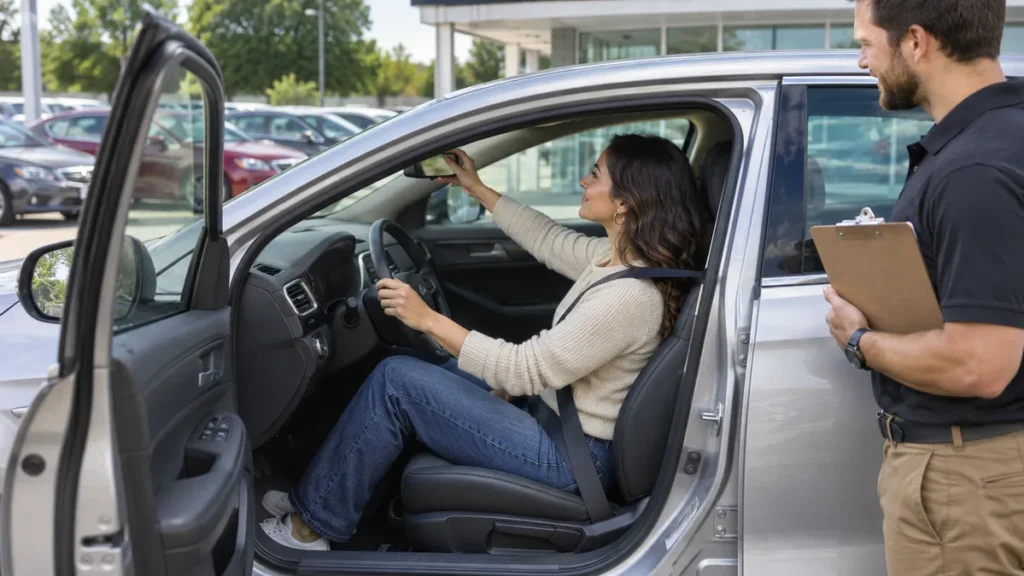
A used car test drive checklist helps you notice how a vehicle fits your everyday life instead of letting a clean cabin or an enthusiastic sales pitch make the decision. The goal is to collect observations you can discuss with an independent mechanic, not to prove that a car has no hidden problems.
Plan the appointment in daylight when possible. Ask for enough time to inspect the controls while parked and drive a representative route legally and safely. If the seller will not allow a reasonable inspection, treat that as information about the transaction.
Prepare Your Used Car Test Drive Checklist
Write down your actual requirements before arrival: highway commuting, tight parking, rear-seat access, cargo, or frequent stop-and-go traffic. Choose three priorities you can assess during the drive. A vehicle that looks suitable on paper may have a seat position, sightline, or control layout that does not work for you.
Confirm the seller’s driving requirements and insurance arrangements. Bring your license, but avoid sending unnecessary personal information to an unverified seller. Agree on the route and who will accompany you. Keep the drive separate from discussing financing or signing purchase paperwork.
Start With the Vehicle Parked
Check Your Driving Position
Adjust the seat, steering wheel, mirrors, and seat belt. Can you reach the pedals comfortably and see the instruments without leaning? Check access to commonly used controls. Try the rear seat yourself if adults will use it regularly. Bring a child seat to assess fit when relevant, following both manuals for installation.
Understand the Controls
Locate lights, wipers, defrost, parking brake, and hazard lights before moving. Ask about unfamiliar gear selectors and driver-assistance alerts. Pairing a personal phone is optional; if you do, remove stored information afterward. Check that the entertainment system is not hiding a warning message.
Record What You Observe
Note the mileage and visible warnings. Ask the seller to explain warning lights that remain on after startup. Do not accept “they all do that” as a diagnosis. A quiet startup also does not demonstrate the condition of components you cannot see.
Use a Representative Route
Start on a calm road and gradually include the kinds of conditions you normally encounter. Assess steering effort, ride comfort, cabin noise, and ordinary acceleration. A freeway segment can be useful if safe and permitted, but never make abrupt maneuvers or exceed speed limits to test the vehicle.
Brake normally in suitable traffic conditions. Notice vibration, pulling, unusual sounds, or an inconsistent pedal feel. Stop the drive safely if a serious warning or unsafe behavior appears. Do not intentionally trigger emergency-braking systems or test traction limits.
Use a passenger to record observations, or wait until parked. Your notes should describe what happened: “vibration felt through the seat at steady road speed” is more useful than “needs tires.” Similar symptoms can have different causes.
Check the Everyday Tasks
Park in a legal space resembling one you use regularly. Assess visibility and turning space without relying only on a camera. Open the doors and cargo area. If you carry a stroller, mobility aid, or work case, bring it rather than estimating fit from published cargo volume.
Use a simple scorecard with separate columns for “comfortable,” “needs explanation,” and “deal breaker.” Keep these judgments separate from repair estimates. An uncomfortable seat may matter more to your ownership experience than a cosmetic scratch.
Follow Up Before Agreeing to Buy
The FTC recommends an independent inspection even when a used vehicle has been certified or inspected by a dealer. Ask the mechanic to investigate your notes and provide written findings. Review our used-car inspection guide for the broader process.
Also check the vehicle’s history. A good test drive, a history report, and a mechanical inspection answer different questions; none should be treated as a complete substitute for the others.
Before leaving, summarize what remains unresolved and request any seller promises in writing. You can pause the decision. A test drive is an information-gathering appointment, not an obligation to purchase.
Source and Further Reading
FTC: buying a used car from a dealer.
This guide provides general shopping information. Inspection needs, insurance arrangements, and transaction rules vary. Consult a qualified mechanic and verify the terms of the specific vehicle purchase.