A vehicle safety recall means that a manufacturer or the National Highway Traffic Safety Administration has identified a safety-related defect or a failure to meet applicable federal safety standards. A recall should be addressed even when the vehicle appears to operate normally.
The recall notice explains the potential risk, the vehicles affected, any temporary precautions, and the repair or remedy offered by the manufacturer. Acting promptly can reduce the possibility of injury, breakdown, or additional vehicle damage.
1. Confirm That the Vehicle Safety Recall Applies to Your Car
A recall may affect only certain vehicles within a model year, production period, factory, or equipment configuration. Do not rely only on the make and model listed in a news report.
Use the vehicle’s 17-character Vehicle Identification Number, or VIN, to confirm whether your specific car has an unrepaired recall.
The VIN is commonly found:
- At the lower corner of the windshield on the driver’s side.
- On a label inside the driver-side door frame.
- On the vehicle registration.
- On insurance documents.
Enter the VIN in the official NHTSA recall lookup tool or contact the vehicle manufacturer.
2. Read the Entire Recall Notice
The manufacturer’s letter normally identifies the defective component, describes the safety risk, explains warning signs, and provides instructions for obtaining the remedy.
Read the complete notice instead of assuming every recall requires the same response. Some repairs can be scheduled normally, while others may include urgent instructions.
Keep the letter, recall campaign number, and any related communication until the repair is completed.
3. Follow Any Urgent Safety Instructions
Some recalls may include directions such as “Do Not Drive” or “Park Outside.” These warnings should be followed immediately.
A park-outside instruction may be issued when a defect could create a fire risk. A do-not-drive instruction indicates that operating the vehicle may present a serious danger.
If the notice contains special precautions, contact the manufacturer or authorized dealership before moving the vehicle. Ask whether towing or another transportation arrangement is available.
4. Contact an Authorized Dealership
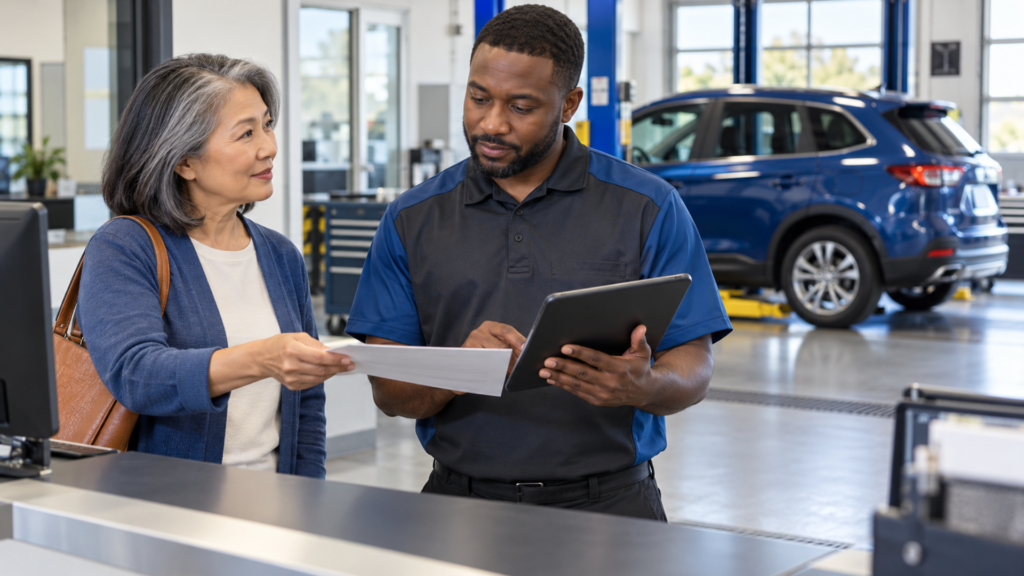
Call an authorized dealership for the vehicle’s brand and provide the VIN and recall campaign number. Confirm that the dealership performs recall work and ask whether the required parts are available.
When scheduling, request:
- The expected repair time.
- Confirmation that the remedy will be provided under the recall.
- Any instructions about driving or parking the vehicle.
- Information about transportation options if the repair takes longer.
- A written service record after completion.
Dealership workload and parts availability can affect appointment timing, so schedule the repair as soon as possible.
5. Confirm the Recall Remedy and Any Eligibility Limits
NHTSA explains that manufacturers must remedy safety recalls by repairing the vehicle, replacing the defective component, offering a refund, or, in rare cases, repurchasing the vehicle.
The appropriate remedy depends on the recall. Recall repairs are generally provided without charge when the vehicle falls within the applicable federal remedy period. Owners of older vehicles should confirm eligibility, parts availability, and any extended coverage directly with the manufacturer.
If you are told that payment is required, contact the manufacturer using the customer-service information in the recall notice before authorizing the work.
6. What If Replacement Parts Are Not Available?
Sometimes a recall is announced before dealerships receive enough replacement parts or final repair instructions. Ask the manufacturer or dealership what temporary precautions should be followed.
Keep documentation of your calls and appointment attempts. Request notification when parts become available and confirm that your contact information is current.
Do not attempt to repair a safety defect yourself unless the manufacturer’s official instructions specifically authorize an owner-performed remedy.
7. Used Vehicles Can Have Open Recalls
Alongside the recall lookup, review the used car’s history for title and mileage information; neither check establishes the vehicle’s complete mechanical condition.
A recall follows the vehicle rather than the original owner. A used car may therefore have an unrepaired recall even if the current owner never received a letter.
Check the VIN when purchasing a used vehicle and after changing your address. The safety issue associated with a recall does not simply become irrelevant over time, but free-repair eligibility and parts availability may differ for older vehicles. Confirm the available remedy directly with the manufacturer.
A vehicle history report is not a substitute for checking the official recall database.
8. Keep Proof of the Completed Repair
After the work is finished, request a repair order showing the recall campaign number, date, mileage, parts installed, and confirmation that the remedy was completed.
Keep this document with the vehicle’s maintenance records. It can be useful if the recall continues to appear as open or when the vehicle is later sold.
Allow time for databases to update. If the recall still appears after a reasonable period, contact the dealership or manufacturer.
9. Report Problems With the Recall Process
If an authorized dealership refuses to perform the remedy, tries to charge for the recall repair, or cannot explain the next step, contact the manufacturer first.
You can also contact NHTSA or submit a complaint through its website. Complaints help the agency identify possible safety-defect patterns and monitor recall effectiveness.
If you experience a safety problem that is not currently covered by a recall, document what occurred and file a report with NHTSA.
10. Check for Recalls Regularly
Do not depend entirely on mailed notices. Letters can be missed after a move, ownership change, or registration error.
NHTSA recommends checking for open recalls periodically. Its free SaferCar app can also provide alerts for vehicles and equipment entered by the user.
Recall information is one part of vehicle safety. Drivers should also review maintenance, tires, warning lights, and available car safety ratings.
Quick Recall Checklist
- Locate the VIN.
- Confirm the open recall through NHTSA or the manufacturer.
- Read every instruction in the recall notice.
- Follow do-not-drive or park-outside warnings.
- Schedule the remedy with an authorized dealership.
- Confirm that recall parts are available.
- Keep all appointment and repair records.
- Recheck the VIN after the repair is completed.
Official Tools and Search Limitations
Use NHTSA’s safety-problem reporting page to report a suspected defect. The official recalls page also provides links to the SaferCar apps and email alerts.
NHTSA states that its VIN search does not show completed recalls, some newly announced campaigns before all VINs are identified, non-safety service campaigns, international recalls, certain small manufacturers, or recalls more than 15 years old except where manufacturers provide additional coverage. This is a search-coverage limitation, not a statement that an old defect is harmless or that every repair remains free. Ask the manufacturer about the exact campaign and remedy eligibility.
A zero-result lookup does not replace an inspection. Record the date of the search, keep the manufacturer’s notice, and follow any do-not-drive or park-outside instruction even while arranging an appointment.
Final Thoughts
A vehicle safety recall should never be ignored simply because the car still drives normally. Confirm whether the recall applies to your VIN, follow all interim safety instructions, and arrange the manufacturer’s remedy promptly.
Checking for recalls regularly is a simple step that can protect drivers, passengers, and other road users.
This article provides general educational information. Recall risks, instructions, remedies, and availability vary by campaign and vehicle. Follow the manufacturer’s official notice and NHTSA guidance. If the vehicle may be unsafe to drive, stop using it and contact the manufacturer or an authorized dealership.