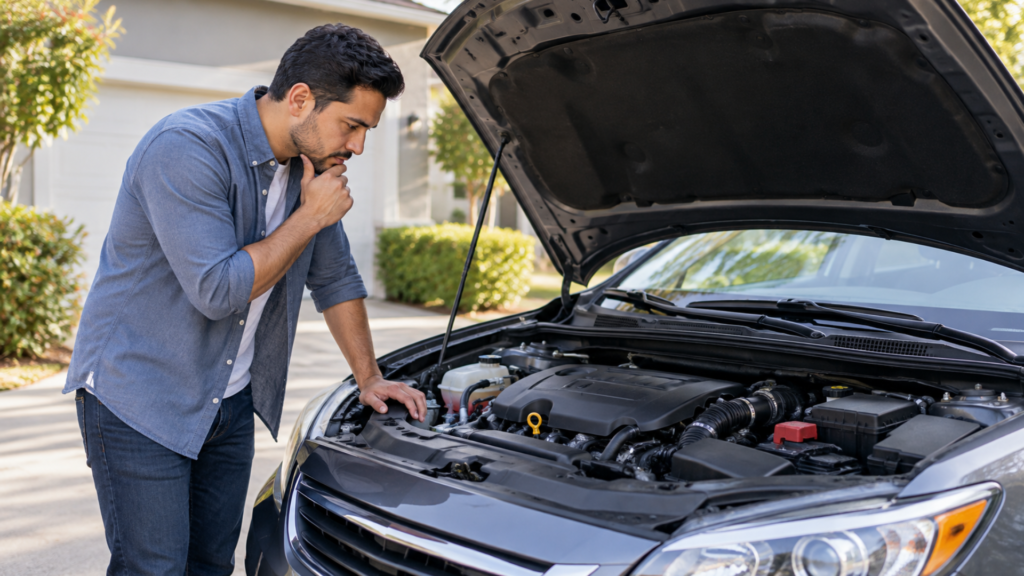
Learning how to inspect a used car before buying helps you decide whether it is worth paying for a professional evaluation. Start with its identity and records, examine it in daylight, and take a safe test drive only if its condition allows. Your observations can uncover questions; they cannot certify the car as safe or mechanically sound.
Use this checklist before committing to a purchase. An independent pre-purchase inspection by a qualified mechanic remains essential, even when the vehicle looks clean or has a reassuring history report.
1. Arrange the Visit Before You Travel
Ask for the VIN, current mileage, title status, maintenance records, number of keys, and permission for an independent inspection. Arrange to see the car in daylight on a dry, level surface. Ask the seller to leave the engine cold so you can observe a normal start.
Bring a flashlight, a tire-pressure gauge, and a written checklist. Confirm that you have permission and appropriate insurance arrangements for a test drive. If the seller refuses reasonable document checks or an independent inspection, consider another vehicle.
2. Match the VIN and Review the Records
Compare the VIN on the dashboard and door label with the title, registration, and available service records. Ask the seller to explain mismatches, missing records, or mileage that moves backward. Do not treat an explanation as verification.
Follow our guide to checking a used car’s history for the research process. A report can identify recorded events, but an unreported collision or repair may be absent.
For a dealer sale, review the Buyers Guide and the written warranty terms. The FTC’s used-car buying guidance explains why a history report does not replace an independent inspection. Keep promises about repairs or coverage in writing.
3. Check Recalls Before the Test Drive
Enter the VIN in NHTSA’s recall lookup. Read any manufacturer instructions and ask an authorized dealer about the remedy. If a notice says not to drive or specifies parking precautions, follow those instructions.
No open recall result is a complete safety certificate: the lookup has coverage limitations, and mechanical defects can exist without a recall. Our guide to responding to a vehicle safety recall explains the next steps.
4. Examine the Body, Glass, and Visible Structure
Walk around the car and compare panel gaps, paint color, and reflections. Look for overspray, damaged glass, uneven door alignment, and corrosion around visible seams. Cosmetic differences are questions to investigate, not proof of structural damage.
Check that doors, the hood, and the trunk open and latch properly. Look for damp carpets, water marks, musty odors, and corrosion in accessible interior areas. A freshly cleaned cabin does not rule out flood damage.
Do not crawl beneath a vehicle supported only by a jack. Ask the mechanic to inspect the underside, structural repairs, and corrosion on appropriate lifting equipment.
5. Inspect Tires and Wheels
Look for cracks, bulges, exposed cords, damaged wheels, and uneven tread wear. Check tire sizes and specifications against the vehicle’s requirements. Uneven wear can have several causes; a mechanic should determine whether alignment, suspension, or other work is needed.
Use our guide to reading a tire sidewall to understand size and date markings. Consult NHTSA’s tire safety guidance and the vehicle label for recommended cold inflation pressure. The maximum pressure on the tire is not the vehicle’s recommended setting.
Do not test-drive a car with visibly unsafe tires. Include replacement costs in your decision when a professional recommends new tires.
6. Check the Cabin and Electrical Equipment
Try the seat adjustments, seat belts, windows, locks, mirrors, lights, horn, climate controls, wipers, and infotainment functions while parked. Confirm that visibility and seating position work for you.
Watch the dashboard’s normal startup sequence and consult the owner’s manual for the meaning of indicators. Warning lights that stay on, fail to illuminate when expected, or behave unusually need investigation. Turning a light off does not establish that its cause has been repaired.
Check included keys and accessories. For an electric or plug-in hybrid vehicle, ask a qualified specialist to assess charging operation, available battery-health information, and remaining battery warranty. Do not touch high-voltage components.
7. Observe the Engine Bay and Cold Start
With the engine off and cool, look for visible leaks, damaged hoses, loose components, or unusual fluid staining. Follow the owner’s manual for any owner-level fluid check. Never remove a hot cooling-system cap or reach near moving belts or fans.
Start the engine outdoors and listen for persistent knocking, rough running, or other unusual noises. Note smoke, smells, and dashboard warnings for the mechanic. Their meaning depends on the vehicle and conditions; a visual check cannot establish the cause.
If there is a fuel smell, smoke, overheating, or another immediate hazard, stop the inspection safely and seek professional help.
8. Take a Safe, Representative Test Drive
Only proceed if the car appears safe and you are authorized to drive it. Choose a legal route that includes ordinary turns, low-speed maneuvering, and a suitable higher-speed road when conditions permit. Use the separate test-drive checklist for seating, controls and everyday usability; keep those observations alongside, rather than in place of, the mechanic’s findings.
Observe steering response, normal braking, acceleration, transmission behavior, ride quality, and visibility. Keep both hands ready to control the vehicle; do not perform emergency maneuvers or deliberately provoke a fault.
If braking or steering becomes abnormal, a critical warning appears, or the vehicle overheats, pull over when safe and arrange help. Our guide to car warning signs that need immediate attention covers symptoms that should interrupt a drive.
9. Pay for an Independent Pre-Purchase Inspection
Choose a qualified mechanic who is independent of the seller and familiar with the vehicle. Agree on the inspection’s scope and price before booking. Ask for a written report identifying urgent safety concerns, needed repairs, upcoming maintenance, and estimated costs.
The inspection should address areas you cannot evaluate confidently, including the underside, brakes, suspension, leaks, diagnostic information, and evidence of prior repairs. Specialist testing may be appropriate for a modified car, an EV, or suspected collision or flood damage.
A seller’s inspection or certification is useful information, but it does not replace your own assessment of the terms and condition. If you are comparing certified vehicles, review what certified pre-owned coverage includes.
10. Make the Decision From the Evidence
Compare the asking price with the inspection findings and the written costs of immediate repairs and upcoming service. Use our essential maintenance checklist to organize questions about the service history, then follow the manufacturer’s schedule for the specific car.
Resolve unexplained VIN differences, title concerns, and important mechanical findings before committing. Ask for any agreed repairs and conditions in writing. If the seller will not allow verification or the risk exceeds your budget, walking away is a reasonable decision.
Used-Car Inspection Checklist
- Match the VIN and review the title, mileage, and service records.
- Check recalls and follow urgent manufacturer instructions.
- Examine bodywork, tires, cabin equipment, and visible fluid leaks.
- Observe a cold start and take a safe test drive if appropriate.
- Obtain an independent mechanic’s written inspection report.
- Compare the price, needed repairs, and ownership costs before signing.
Printable Inspection Notes
Print this page or use your browser’s Print → Save as PDF option. Record observations rather than marking a vehicle safe from appearance alone. This worksheet does not replace an independent pre-purchase inspection.
Vehicle / year: ____________________ VIN: ____________________
Date / odometer: ____________________ Seller: ____________________
| Check | Observation or question | Follow-up needed |
|---|---|---|
| VIN, title, seller identity and service records agree | ________________ | ________________ |
| History report discrepancies and open recalls | ________________ | ________________ |
| Body, glass, visible damage and signs of water entry | ________________ | ________________ |
| Tire condition, age, size and uneven wear | ________________ | ________________ |
| Lights, belts, cabin controls and warning lamps | ________________ | ________________ |
| Cold-start behavior and visible leaks, where applicable | ________________ | ________________ |
| Safe test-drive observations: steering, braking, noise | ________________ | ________________ |
| Independent mechanic’s findings and written repair estimates | ________________ | ________________ |
| Written out-the-door price and promised repairs | ________________ | ________________ |
Decision: Proceed only after unresolved questions are addressed / Request more evidence / Decline. Do not test-drive a vehicle with a suspected serious brake, steering, tire, or overheating problem. Do not crawl under a vehicle supported only by a jack or touch high-voltage components.
Final Thoughts
A useful used-car inspection combines documents, careful observation, a safe test drive, and an independent professional evaluation. The goal is to understand the specific vehicle and its likely costs before you buy it.
Related Automotive Guides
Explore additional resources about vehicle maintenance, safety and identifying potential problems before they become serious.
10 Essential Car Maintenance Checks
Learn about important maintenance inspections that can help drivers identify wear, monitor vehicle condition and maintain reliability.
Maintenance & Safety Guides
Discover additional automotive safety information, routine maintenance recommendations and practical educational resources.
This checklist is educational and cannot diagnose a vehicle or guarantee its condition. Follow the owner’s manual, recall instructions, and the advice of a qualified mechanic.